Halloween – Oíche Shamhna
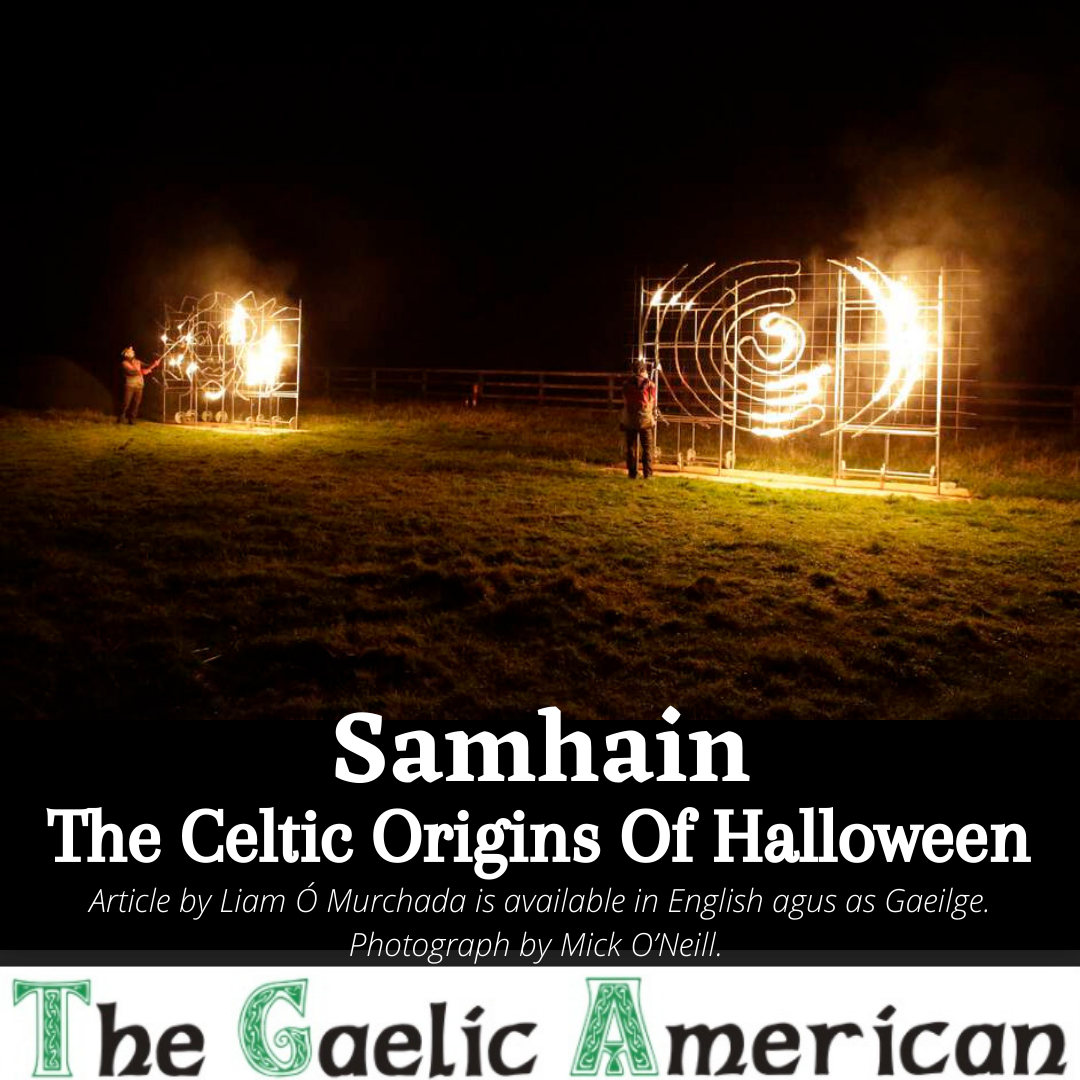
The term “Halloween” is a short Christian way of saying, The Eve of All Hallows. The business of creatures from the nether world appearing after dark is an ancient Celtic superstition concerning the Celtic calendar, on which its New Year’s Day, the 1st of November, is the feast of Samhain. Because the ancient Celts believed that each year had a unique spiritual persona, and that contact relief was not required for the spirit of the old year to leave, once the sun had set on his year (i.e., there was no thought of a relieving ceremony, like there is on a ship, when the Officer of the Deck may leave the bridge only after being “properly relieved”), and neither did he, nor the spirit of the new year have a time piece (Swiss, Japanese, or other), it was possible that the old year might end before the new year might begin. All of which means the intervening time would belong neither to the new year, nor to the old, becoming what we might call fourth dimensional (“Oíche Shamhna”), during which if you were abroad that night you might, however inadvertently, slip into the nether world, and that creatures of the nether world might, just as inadvertently, slip into our world — whence the ghosts, goblins, and other strange creatures wandering about the country-side – in the dark. The purpose of placing treats outside, was to mollify such creatures, lest they play a trick, in repayment for such a lack of hospitality.
Cé gur bealach gairid Críostaí an téarma “Halloween” a rá, The Eve of All Hallows . Is é an gnó créatúir ón domhan glan atá le feiceáil tar éis dorcha ná piseog Cheilteach ársa maidir leis an bhféilire Ceilteach, ar a bhfuil Lá na hAthbhliana, an 1 Samhain mar fhéile na Samhna. Mar gheall gur chreid na Ceiltigh ársa go raibh pearsan spioradálta uathúil ag gach bliain, agus nár theastaigh faoiseamh teagmhála chun spiorad na seanbhliana a fhágáil, a luaithe a bhí an ghrian ag luí ar a bhliain (ie, níor smaoiníodh ar shearmanas faoisimh , mar atá ar long, nuair nach féidir le hOifigeach na Deic an droichead a fhágáil ach amháin tar éis dó a bheith “faoisimh i gceart”), agus ní raibh píosa ama aige féin, ná ag spiorad na bliana nua (na hEilvéise, na Seapáine nó eile), b’fhéidir go dtiocfadh deireadh leis an tseanbhliain sula dtosódh an bhliain nua. Ciallaíonn sé seo go léir nach mbainfeadh an t-am eatramhach leis an mbliain nua, ná leis an sean, agus an rud a d’fhéadfadh a bheith againn mar cheathrú toise (Oíche Shamhna), agus dá mbeifeá, thar lear an oíche sin d’fhéadfá sleamhnú isteach sa domhan níos neamhaireach, agus na créatúir sin d’fhéadfadh an domhan glan, díreach chomh neamhaireach, sleamhnú isteach inár ndomhan – as a dtagann na taibhsí, na gobáin, agus na créatúir aisteach eile atá ag fánaíocht ar thaobh na tire – sa dorchadas. Ba é an aidhm a bhí le déileálann a chur lasmuigh ná créatúir den sórt sin a mhollú, ar eagla go n-imreodh siad cleas, mar aisíocaíocht ar an easpa fáilteachais sin.
Prior to the 7th century, the Feast of All Saints was the 7th of May, but many, since Christian, nations still kept the old Oíche Shamhna (nether world after dark) tradition, so, as there was no single saint who could, single-handedly, Christianize the date (like Saint Bridget had done on “Bridgets’ Day”, the 1st of February (Imbolc)), it was decided to move the Feast of All Saints to the 1st of November, to do the job.
Roímh an 7ú haoois, ba é Féile na Naomh Uilean 7 Bealtaine, ach cnoinnigh go leor náisiún, ó Chríostaí, sean-thraidisiún Oíche Shamhna (domhan níos glaine tar éis dorcha), mar sin, mar nach raibh aon naomh amháin ann a d’fhéadfadh, single, Dan an data a Chríostaíocht (mar a rinne Naomh Bríd ar “Lá Bridgets”, an 1 Feabhra (Imbolc)), socraíodh Féile na Naomh Uile a aistriú go dti an 1 Samhain, chun an obair a dhéanamh.
Yet the ancient Celtic superstition continues, albeit with a Christian label, but only as a fun, harmless prelude to All Hallows.
Ach leanann an piseog Cheilteach ársa ar aghaidh, cé gur lipéad Críostaí é, ach mar réamhrá neamhdhíobhálach do Gach Halla.
By Liam Ó Murchadha.

In recent years the fact that Halloween has Irish/Celtic origins has been emphasised through the Púca Festival.
The Púca Festival is held largely in the greater Meath area, which holds significance in the Celtic tradition. One of the locations hosting the Púca Festival is Slane Castle – from Drogheda.ie , “The spirit of Púca is back, bringing more mischief and merriment than ever before! From 23 – 31 October 2021 visitors from near and afar are being welcomed back for a week of music and mythology, sideshows and standup, cabaret and cocktails, and everything else in between.”